

Introduction
The stock market today is one of the most talked-about topics in the world of finance. Every day, millions of investors check market updates, monitor stock prices, and analyze trends to make informed decisions. Whether you are a beginner trying to understand how it works or an intermediate trader seeking better strategies, knowing the dynamics of the stock market today is essential.
Understanding the stock market can be overwhelming at first. You might hear terms like “bull market,” “bear market,” “dividends,” or “market capitalization,” and it may feel like learning a new language. However, with the right approach, anyone can grasp the basics and start making informed decisions. The key is to focus on learning gradually, understanding trends, and practicing with small investments before committing larger amounts.
Today’s stock market offers opportunities across various sectors. From technology and healthcare to energy and consumer goods, every sector reacts differently to economic news, corporate earnings, and global events. Knowing how these factors affect the stock market today will help you make smarter choices, reduce risks, and potentially increase profits.
In this comprehensive guide, we will cover what the stock market today really means, why it matters, and provide a step-by-step guide to investing wisely. We will also discuss benefits, risks, common mistakes, FAQs, and expert tips to help you navigate the market confidently. By the end of this article, you will feel better equipped to follow the stock market today and make informed investment decisions.
Table of Contents
What is the Stock Market Today?
The term “stock market today” refers to the current state and movements of financial markets where stocks, bonds, and other securities are bought and sold. It reflects real-time prices, market trends, and investor sentiment. Essentially, it is a snapshot of how different companies’ shares are performing at a particular moment.
The stock market today is influenced by a wide variety of factors. Economic data, government policies, global events, and corporate news all affect stock prices. For example, when a company reports higher-than-expected earnings, its stock price may rise. Conversely, bad news about a sector or the economy can push stock prices down.
Stock exchanges such as the New York Stock Exchange (NYSE), Nasdaq, and London Stock Exchange play a crucial role in providing a platform for trading. Investors buy and sell shares through brokers, who act as intermediaries. The prices change throughout the trading day based on supply and demand.
Monitoring the stock market today is essential for anyone who wants to invest wisely. Even small fluctuations can have significant effects on your investment portfolio. By understanding what drives these changes, investors can make informed decisions about when to buy, sell, or hold stocks.
Why is the Stock Market Today Important?

The stock market today is important for several reasons:
- Wealth Creation: Investing in stocks has historically been one of the most effective ways to grow wealth over time. Smart investments today can provide financial security in the future.
- Economic Indicator: The stock market reflects the overall health of the economy. Rising markets often indicate economic growth, while declining markets may suggest slowing economic activity.
- Liquidity: Stocks can be bought and sold relatively easily, making them a flexible investment option.
- Opportunities Across Sectors: The market today offers a range of investment options, allowing investors to diversify across technology, healthcare, energy, and more.
- Dividends and Income: Many companies pay dividends, providing investors with a steady income stream in addition to potential capital gains.
Understanding the stock market today helps investors anticipate trends and make decisions based on both current events and long-term strategies. It also provides opportunities for learning, financial planning, and achieving personal financial goals.
Detailed Step-by-Step Guide to Navigating the Stock Market Today
Step 1: Understand the Basics
Before investing, you need to understand key terms:
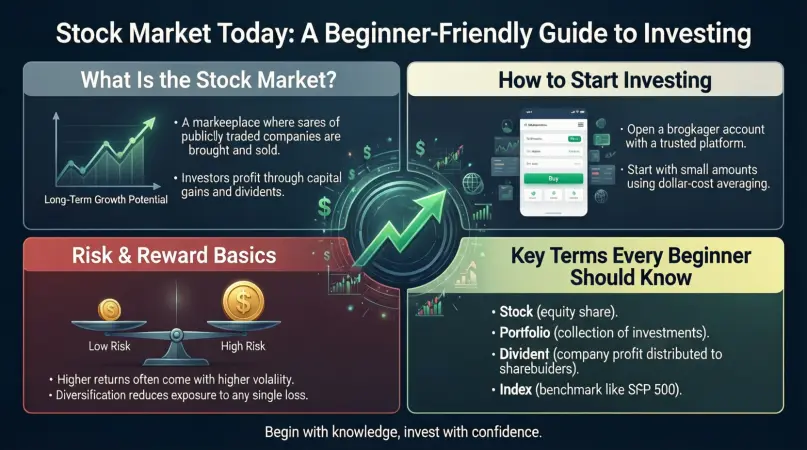
- Stocks: Shares of ownership in a company.
- Bonds: Debt instruments issued by companies or governments.
- Indices: Benchmarks like S&P 500 or Dow Jones that track the performance of groups of stocks.
- Dividends: Profit shared with shareholders.
Step 2: Choose a Reliable Broker
A broker acts as the bridge between you and the stock exchange. Choose a broker that offers:
- Low fees and commissions
- Easy-to-use trading platforms
- Educational resources for beginners
- Real-time market updates
Step 3: Research and Analyze Stocks
Look at company fundamentals such as:
- Revenue and Profit Trends
- Debt Levels
- Management Quality
- Industry Position
Use tools like financial statements, news updates, and stock analysis reports to make informed choices.
Step 4: Start with a Diversified Portfolio
Avoid putting all your money into one stock. Diversification reduces risk:
- Invest in different sectors (technology, healthcare, finance)
- Include stocks of various sizes (large-cap, mid-cap, small-cap)
- Consider a mix of stocks and bonds
Step 5: Monitor the Stock Market Today
Keep track of your investments and market trends:
- Follow daily stock updates and indices
- Watch news that impacts the economy or specific sectors
- Adjust your portfolio as needed
Step 6: Learn Technical Analysis
Technical analysis helps you predict stock movements using charts and historical data. Key concepts include:
- Support and Resistance Levels
- Moving Averages
- Volume Analysis
Step 7: Understand Market Sentiment
Investor sentiment often drives short-term market movements. Pay attention to:
- News headlines
- Social media trends in finance
- Analyst reports
Step 8: Practice Patience and Discipline
Investing is not about quick gains. Stick to your strategy, avoid emotional decisions, and review your portfolio periodically.
Benefits of the Stock Market Today
Investing in the stock market today offers several advantages:
- Potential for High Returns: Historically, stock investments yield higher returns compared to savings accounts or bonds.
- Liquidity: Easily buy or sell shares in active markets.
- Diversification Opportunities: Spread risk across multiple sectors and companies.
- Dividend Income: Earn regular income from dividend-paying stocks.
- Inflation Hedge: Stocks often outperform inflation over the long term.
- Ownership in Companies: Gain voting rights and participate in company growth.
Disadvantages / Risks
While the stock market today offers opportunities, it also carries risks:
- Market Volatility: Prices can change rapidly, leading to potential losses.
- Economic Sensitivity: Economic downturns can impact stock values.
- Lack of Guarantees: Unlike fixed deposits, stocks are not guaranteed investments.
- Emotional Traps: Fear and greed can lead to poor investment decisions.
- Time-Intensive Research: Successful investing requires ongoing learning and monitoring.
Common Mistakes to Avoid
- Investing Without Research: Blindly buying stocks can lead to losses.
- Overtrading: Frequent buying and selling can erode profits.
- Ignoring Diversification: Putting all money in one sector increases risk.
- Reacting to Short-Term Volatility: Panicking during market dips is common but costly.
- Following the Crowd: Popular stocks are not always the best investments.
- Neglecting Fees: High broker fees can reduce overall returns.
FAQs About the Stock Market Today
1. What is the best way for beginners to start investing in the stock market today?
Start small with a diversified portfolio, choose reliable brokers, and focus on long-term goals rather than short-term gains.
2. How often should I check the stock market today?
Daily monitoring is helpful, but avoid obsessing over minute-to-minute changes. Weekly reviews are often sufficient for beginners.
3. What sectors perform best in the stock market today?
Performance varies, but technology, healthcare, and renewable energy sectors have shown consistent growth over time.
4. Can I make money from the stock market today without investing in individual stocks?
Yes, consider mutual funds or exchange-traded funds (ETFs) for diversified exposure without picking individual stocks.
5. How much money do I need to start investing in the stock market today?
You can start with as little as $50–$100, depending on the broker and the type of investment.
6. Is the stock market today risky for beginners?
All investments carry risk, but proper research, diversification, and a long-term strategy reduce potential losses.
7. Should I follow stock market news every day?
Following news is important, but focus on credible sources and avoid reacting to rumors or hype.
8. What are dividends, and why are they important?
Dividends are a portion of a company’s profit paid to shareholders. They provide regular income in addition to stock price gains.
Expert Tips & Bonus Points
- Start Early: The earlier you invest, the more time your money has to grow through compounding.
- Set Goals: Define financial objectives before investing.
- Use Stop-Loss Orders: Protect investments from major losses.
- Keep Learning: Attend webinars, read books, and follow market trends.
- Track Performance: Review your portfolio periodically to make informed adjustments.
- Avoid Emotional Decisions: Stick to your plan during market fluctuations.
- Consider Long-Term Investments: Patience often yields higher returns than frequent trading.
Bonus tip: Use paper trading or simulation platforms to practice investing without risking real money. This builds confidence and helps understand market dynamics.
Conclusion
The stock market today offers a world of opportunities for beginners and intermediate investors alike. While it can seem intimidating initially, understanding key concepts, researching stocks, and maintaining discipline can help you navigate it successfully. The market’s fluctuations, driven by economic news, corporate performance, and investor sentiment, provide both challenges and rewards for those willing to learn.
Investing in the stock market today is not just about earning money; it’s about financial education, patience, and strategic planning. By following a structured approach, avoiding common mistakes, and continuously learning, you can build wealth over time and achieve financial goals. Remember, every successful investor started with small steps, learning from both successes and failures.
Stay informed, diversify wisely, and treat investing as a long-term journey. With persistence and knowledge, the stock market today can become a powerful tool for wealth creation and financial security.
