

Introduction
Investing money can feel confusing, especially when safety is your top concern. Many people worry about losing their hard earned savings due to market ups and downs, scams, or poor decisions. That is why understanding safe investment options is so important for beginners and intermediate investors. Safe investment options focus on protecting your capital while offering steady, predictable returns over time. They may not promise quick profits, but they help you sleep better at night.
In today’s uncertain economic environment, choosing the right place to invest has become even more critical. Inflation reduces purchasing power, while keeping money idle in cash often means losing value. The smart approach is to find investments that balance safety, liquidity, and reasonable growth. This article explains safe investment options in clear and simple language, without technical jargon or complicated theories.
You will learn what safe investment options really mean, why they matter, and how to choose them step by step. We will also explore benefits, risks, common mistakes, and expert tips that can help you invest with confidence. Whether you are saving for emergencies, retirement, or long term goals, this guide is designed to help you make informed decisions. By the end, you will understand how safe investment options can support financial stability and long lasting peace of mind.
What Is Safe Investment Options?
Safe investment options are financial choices designed to protect your original money while providing stable and usually modest returns. These investments focus more on capital preservation than aggressive growth. They are suitable for people who prefer low risk and predictable outcomes over high risk and uncertainty.
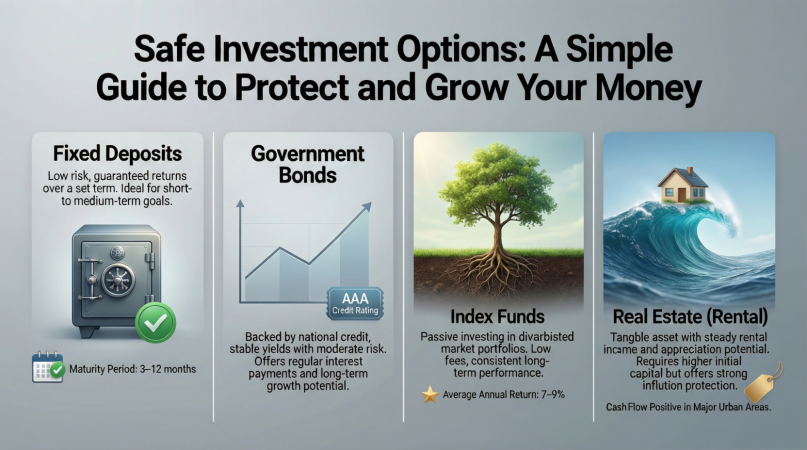
Examples of safe investment options include savings accounts, government bonds, fixed deposits, and high quality debt funds. These options are often backed by governments or regulated institutions, which lowers the chance of default. While returns may be lower compared to stocks or cryptocurrencies, the risk of losing money is also significantly reduced.
Safe investment options are not completely risk free. Inflation, interest rate changes, and limited growth potential are still factors to consider. However, they are generally more reliable than volatile investments. For beginners, safe investment options provide a strong foundation to build financial discipline and confidence. For experienced investors, they act as a stabilizing part of a diversified portfolio.
Why Is Safe Investment Options Important?
Safe investment options play a key role in financial planning. They help protect savings from sudden losses and market shocks. This is especially important during economic downturns or uncertain global conditions.
Another reason safe investment options matter is goal based planning. Short term goals like emergency funds, education expenses, or planned purchases need stability. Risky investments can jeopardize these goals if markets fall at the wrong time.
Safe investment options also support emotional discipline. When investors panic during market drops, they often make poor decisions. Low risk investments reduce stress and prevent impulsive actions. Over time, this calm approach leads to better long term outcomes.
Finally, safe investment options help balance a portfolio. Even growth focused investors need stability to manage risk. By combining safe investments with growth assets, you can create a more resilient financial strategy that adapts to changing conditions.
Detailed Step by Step Guide
Step 1: Understand Your Financial Goals
Start by clearly defining why you want to invest. Are you saving for emergencies, retirement, or a specific purchase? Short term goals usually require safer options, while long term goals allow some flexibility.
Write down your goals, timelines, and required amounts. This clarity helps you choose investments that match your needs without unnecessary risk.
Step 2: Assess Your Risk Tolerance
Risk tolerance varies from person to person. Some people are comfortable with small fluctuations, while others prefer complete stability. Honest self assessment is essential.
Consider your income stability, expenses, and emotional comfort. If market losses cause anxiety, safer investment options are a better fit.
Step 3: Learn Common Safe Investment Types
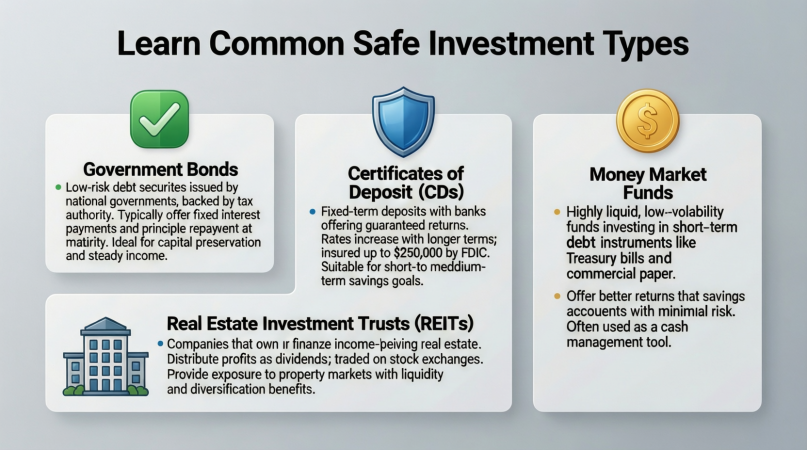
Understanding available options helps you make informed choices. Common safe investment options include:
- Savings and high yield accounts
- Government bonds and treasury bills
- Fixed deposits and certificates
- Money market instruments
- Conservative debt funds
Each option has different liquidity, returns, and lock in periods.
Step 4: Compare Returns and Inflation Impact
Safety alone is not enough. Compare expected returns with inflation rates. Investments that do not beat inflation slowly reduce purchasing power.
Choose options that offer the best balance between safety and real returns. Even small differences matter over long periods.
Step 5: Check Liquidity Needs
Liquidity refers to how quickly you can access your money. Emergency funds need high liquidity, while long term savings can tolerate limited access.
Match investment choices with your liquidity requirements to avoid penalties or forced withdrawals.
Step 6: Diversify Even Within Safe Options
Diversification reduces risk further. Spread money across different safe investment options instead of relying on one product.
This approach protects you from changes in interest rates or policy shifts affecting a single investment.
Step 7: Review and Adjust Regularly
Financial needs change over time. Review your investments annually or after major life events.
Adjust allocations to stay aligned with goals, risk tolerance, and market conditions.
Benefits of Safe Investment Options
- Protect original capital from major losses
- Provide predictable and stable returns
- Lower stress and emotional pressure
- Suitable for short and medium term goals
- Easy to understand and manage
- Help maintain liquidity for emergencies
- Support disciplined financial planning
Disadvantages and Risks
- Lower returns compared to high risk assets
- Inflation can reduce real value over time
- Limited growth potential
- Interest rate changes affect returns
- Some options have lock in periods
- Over reliance may slow wealth building
Common Mistakes to Avoid
Many investors assume safe means zero risk, which is incorrect. Ignoring inflation impact is another common mistake. Some people lock all funds in long term deposits without liquidity planning.
Chasing slightly higher returns within safe categories can also backfire. Always understand terms, penalties, and exit conditions. Finally, failing to review investments regularly leads to outdated strategies.
FAQs
What are the safest investment options for beginners?
Savings accounts, government bonds, and fixed deposits are ideal for beginners. They are easy to understand and offer high safety.
Do safe investment options guarantee returns?
No investment guarantees returns. However, safe investment options have a much lower risk of loss compared to volatile assets.
Can safe investments beat inflation?
Some can, especially higher interest deposits or inflation linked bonds. Choosing wisely is important.
Are safe investment options good for retirement?
Yes, especially during later years. They provide income stability and protect accumulated savings.
How much of my portfolio should be in safe investments?
It depends on age, goals, and risk tolerance. Many experts suggest increasing safety as you approach important goals.
Can I combine safe and growth investments?
Yes. A balanced approach often provides better long term results and risk management.
Expert Tips and Bonus Points
Start with an emergency fund before exploring other investments. Automate contributions to build consistency. Reinvest interest earnings to benefit from compounding.
Stay informed about interest rate trends and policy changes. Avoid making decisions based on fear or rumors. Keep documentation and records organized for easy tracking.
Safe investment options work best when combined with patience, discipline, and realistic expectations. Over time, small steady gains create strong financial foundations.
Conclusion
Safe investment options are an essential part of smart financial planning. They protect your savings, reduce stress, and provide reliable growth over time. While they may not offer exciting returns, their true value lies in stability and peace of mind. For beginners, safe investment options create confidence and financial discipline. For intermediate investors, they balance risk and support long term goals.
The key is understanding your objectives, risk tolerance, and time horizon. By following a structured approach, diversifying wisely, and reviewing regularly, you can make the most of safe investment options. Remember that safety does not mean inactivity. It means choosing carefully, staying informed, and aligning investments with your life plans.
In a world full of uncertainty, safe investment options offer clarity and control. They help you protect what you earn while steadily moving toward financial security. With patience and informed decisions, these options can become the backbone of a resilient and successful investment journey.
